Knowledge Base
The first hour after a basement floods in a DC rowhouse
Water on the basement floor makes everyone want to grab towels and a shop vac. Slow down for two minutes, because the order of the first steps matters more than speed.
By Winifred Larkin, Knowledge Base EditorUpdated 7 min read
The short version
- Check for live power, gas odor and sewage before you step into basement water.
- Find and stop the source, then photograph everything before moving it.
- Move paper, photos and electronics first, and keep damaged items for the adjuster.
- Skip the household vacuum, and never run fans over sewage.
Is it safe to step into the water at all?
Look before you walk down the stairs. In many DC rowhouses the electrical panel, the washer and the water heater all sit in the basement, often along the same wall where water collects. If water is touching outlets, power strips, extension cords or the bottom of the panel, stay on the stairs. Don't reach across a wet floor to flip a breaker.
If the panel is upstairs, or on a dry wall you can reach without standing in water, switch off the basement circuits with a dry hand while standing on a dry surface. If you can't reach it safely, call Pepco and ask for power to be cut at the meter, or call 911 if anything is sparking or smoking. No belonging is worth an electric shock.
Two more checks take seconds. Sniff near the furnace and water heater for a rotten-egg odor; if you smell gas, leave the house without touching light switches and call 911 or Washington Gas from outside. Then look at the water itself. Brown or gray water, toilet paper, or a sewage smell rising from the floor drain means you are dealing with sewage, and nobody should wade through it in sneakers.
How do you stop the water if it is still coming in?
The fix depends on where the water starts, so spend a minute finding the source. A spray from a pipe or a hissing fitting is a supply leak. A spreading puddle under the water heater usually means a failed tank or relief valve. Water entering at the base of a wall or under the front door during a storm is rain or groundwater, and water bubbling up from the floor drain is a drain or sewer problem.
Once you find the main shutoff, tag it with bright tape so you can find it in the dark next time.
- Supply pipe or fitting: close the main shutoff, usually on the front basement wall where the line enters from the street, sometimes behind a panel or under the front steps.
- Water heater: close the cold inlet valve on top of the tank, and turn a gas unit's control to off or pilot.
- Washing machine: close both hose valves behind the machine; unplug it only if the plug and the floor around it are dry.
- Floor drain backing up: stop running water anywhere in the house. No flushing, no laundry, no dishwasher until the drain stops rising.
- Storm water at the door: if there is no lightning and the stairwell is not deep with water, scoop leaves off the drain grate at the bottom of the front steps.
What photos will an insurance adjuster want later?
Take pictures before you move or throw out anything. Phones date-stamp every image, which helps when a claim is reviewed weeks later. Start wide from the bottom of the stairs, then work around the room.
Keep damaged items until your insurer says you can discard them, or at least photograph each one and save a small cutting of carpet and pad. Coverage varies widely: sudden pipe bursts are often covered, while sewer backups and surface flooding often need a separate endorsement or a flood policy, so check your policy before assuming either way. Our guide to organizing photos and receipts for a water claim covers the paperwork side.
- A short video walk-through, narrating what you see and where the water came from
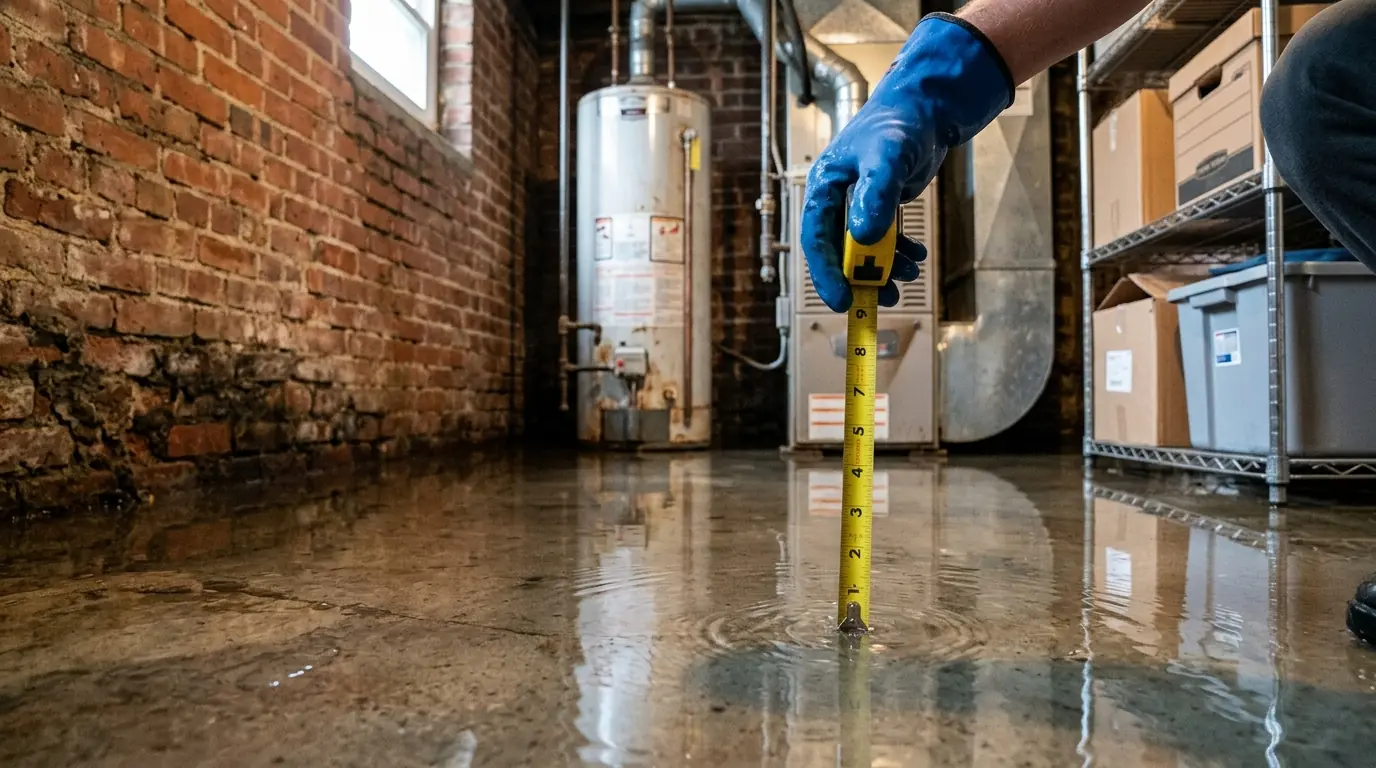
- The water depth: stand a tape measure in the deepest spot and photograph the reading
- The source itself: the split pipe, the rusted tank bottom, the overflowing drain
- Model and serial plates on the furnace, water heater, washer and dryer
- Water lines on walls, furniture legs and boxes, since they fade as things dry
Which belongings should you move first?
Once the area is safe, lift things in order of what cannot be replaced or dried. Paper and photos come first: tax files, passports, family albums and kids' artwork wick water fast and grow mold within days. Lay wet photographs face up on a towel upstairs, and freeze soaked documents in zip bags if you can't dry them soon.
Electronics come next, but only if they are already unplugged or you can unplug them without standing in water. Then roll up area rugs so their dyes don't bleed into the carpet or floor below, and move them somewhere they can drain. For furniture too heavy to carry, slide foil squares, plastic lids or wood blocks under the legs so the wood stops wicking water and stains stay off the carpet.
Stack cardboard boxes on a dry floor upstairs, not on the stairs, where wet boxes collapse and block your way out. Anything touched by sewage should be bagged and set aside for a decision later.
What should you avoid doing, even with good intentions?
Most of the extra damage we see after a basement flood comes from well-meant shortcuts in the first hour.
- Don't use a household vacuum on water. Upright and canister vacuums are not built for liquid and can shock you or burn out; only a wet/dry shop vac plugged into a dry, grounded outlet belongs near water.
- Don't point fans at sewage-contaminated areas. Moving air lifts droplets and dried residue and carries them into the rest of the house.
- Don't pump out a deeply flooded basement in one go while the ground outside is saturated. Pressure from waterlogged soil can crack or bow walls, so FEMA advises lowering deep water gradually, about a third per day.
- Don't relight a furnace or water heater whose burner or controls sat in water. Gas valves and igniters need to be checked first.
- Never mix bleach with ammonia or other cleaners, and skip bleach on drywall and bare wood, where it does little beyond the surface.
- Don't crank up the heat to dry things out. Warm, wet air with nowhere to go speeds mold growth in drywall and carpet pad.
When is it time to call for professional drying?
A small spill from a washer hose on bare concrete is often something you can handle with a shop vac, towels and a dehumidifier. The calculation changes quickly. Call when water covers more than a small area, when it has soaked into carpet pad, drywall or a finished floor, when it came from the floor drain or smelled like sewage, or when the basement is a rented apartment with walls and flooring you can't pull up yourself.
Time matters because mold can start growing on wet building materials within 24 to 48 hours. Our technicians begin by extracting the standing water, then map moisture with pin meters and a thermal camera to see how far it wicked into walls and framing. The drying equipment stays on site and gets checked daily until readings return to normal, which in most basements takes three to five days. If the floor drain was the source, the job follows sewage cleanup procedures instead, with protective gear and removal of porous materials.
Not sure whether you have a sewer problem or groundwater? Our piece on telling sewer water from groundwater walks through the clues. When you're ready, call (202) 989-3053. The line is answered 24/7, and we can talk through what you are seeing before anyone touches the water.
Questions readers ask
Can I use my wet/dry shop vac if the water came up through the floor drain?
You can, but treat the water as sewage. Wear rubber boots, nitrile gloves under heavier work gloves, and eye protection, and keep children and pets upstairs. Afterward, disinfect the tank and hose and replace the filter. If more than a few gallons came up, or the water reached carpet or drywall, porous materials usually have to come out, and that goes beyond a shop vac job.
My basement tenant called at 2 a.m. about water. What should I tell them to do before I get there?
Ask them to stay out of the water if it is near outlets, cords or the panel, and to leave the unit if they smell gas. They should not try to fix anything. If it is safe, they can close the washer valves or stop using drains. Ask for photos of their belongings early, since a renters policy, not yours, usually covers their things. Check both policies.
Should I open the basement windows to air it out after a flood?
In dry, cool weather, opening windows for a few hours helps. In a humid DC summer it usually backfires: outdoor air often carries more moisture than the basement air you are trying to dry, and it condenses on cool walls and floors. Keep the windows closed on muggy days and run a dehumidifier instead, draining it to the floor drain or sump rather than emptying a bucket.
Winifred Larkin, Knowledge Base Editor at JEC Restoration. She writes and updates these guides from the questions homeowners ask our crews on DC area jobs.
Services this guide connects to
Flooded Basement Cleanup
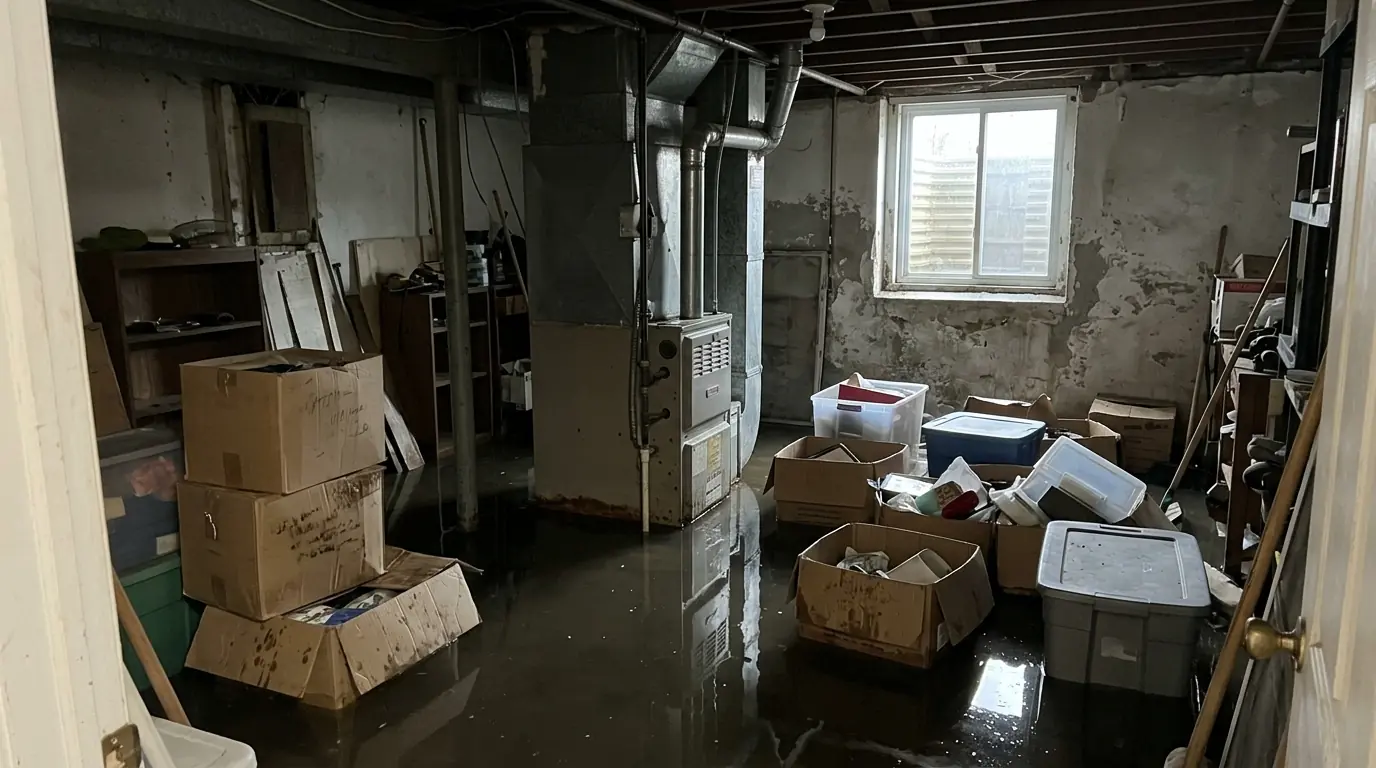
Flooded basement cleanup removes water from a below-grade space, cleans and sanitizes what it touched, takes out finishes that cannot be saved, and dries the slab, walls and framing.
How we handle it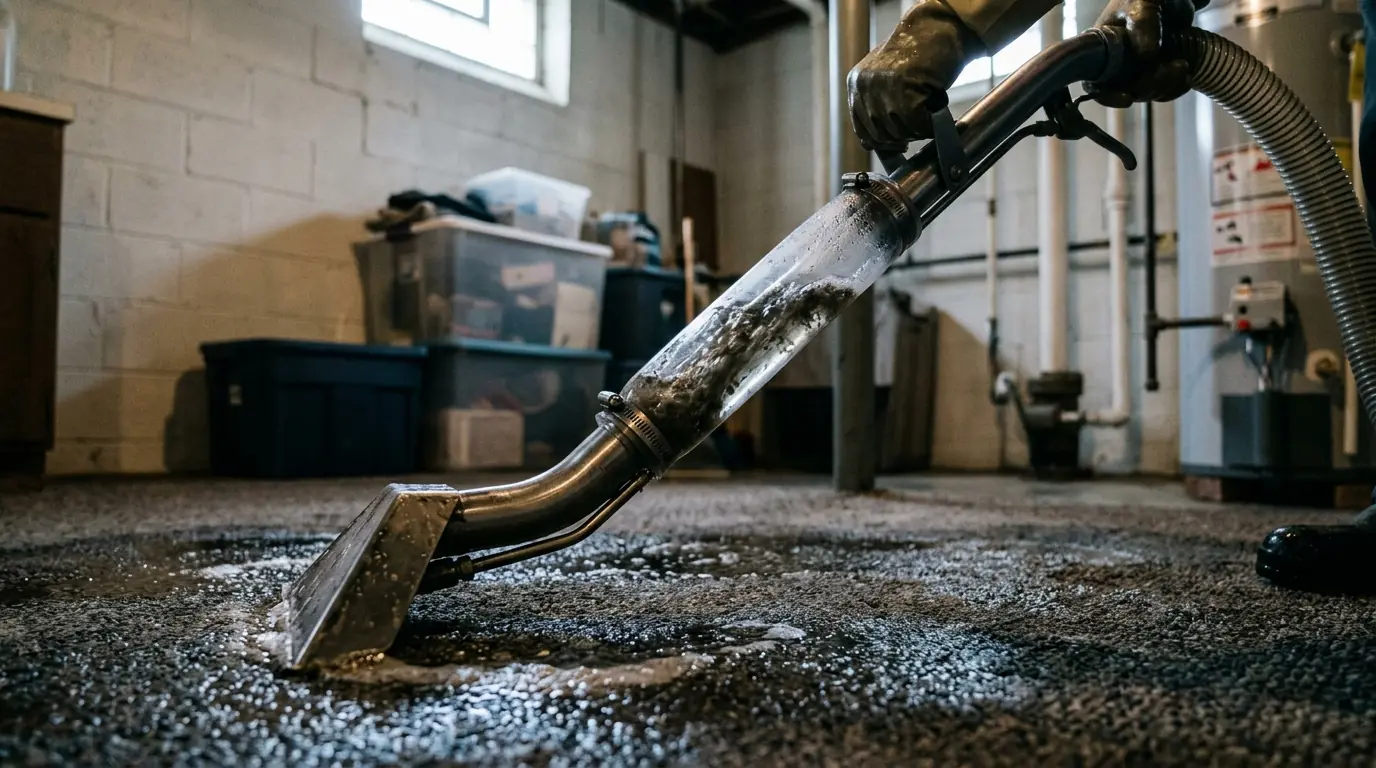
Emergency Water Removal
Emergency water removal is the first stage of a water job: shutting down the source, pumping out standing water, and extracting what has soaked into carpet, pad and hard floors before it moves into walls and subfloor.
How we handle it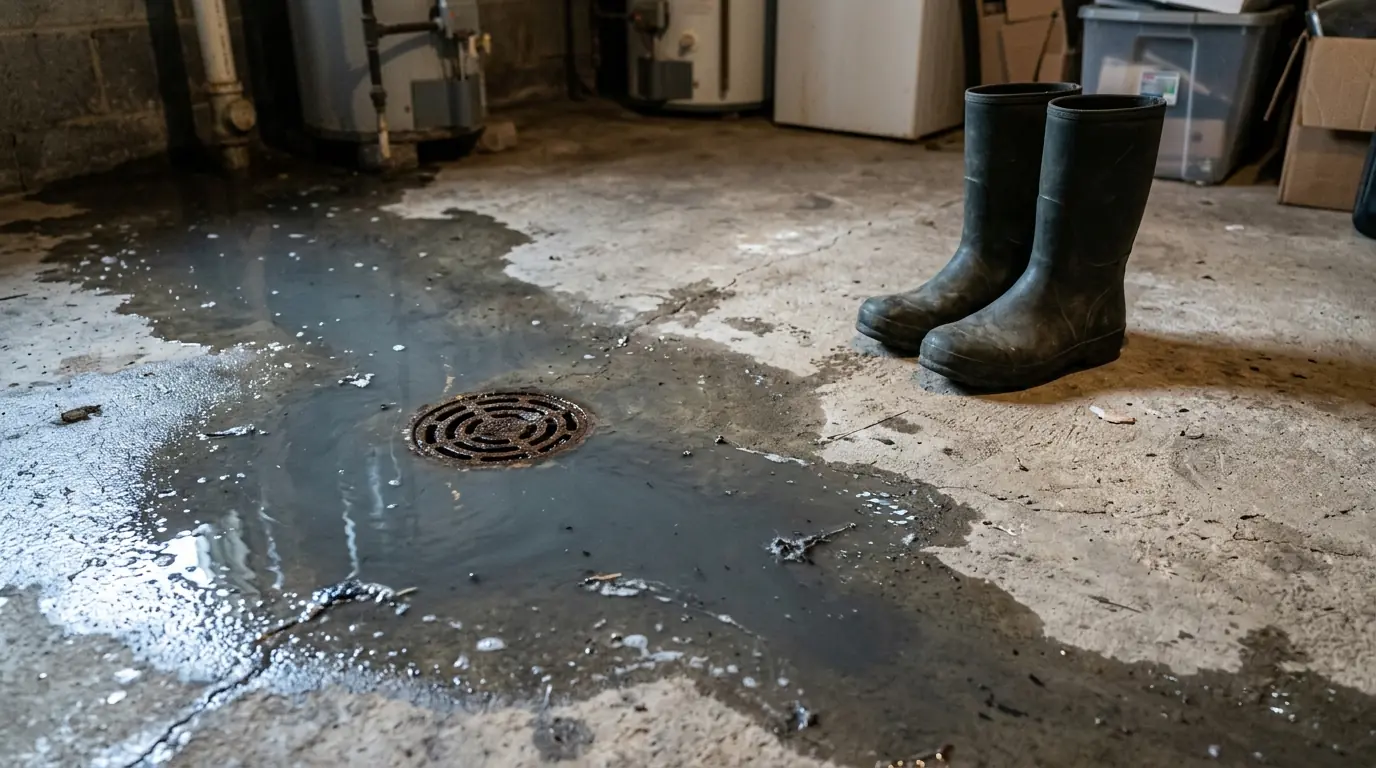
Sewage Backup Cleanup
Sewage backup cleanup is the removal of wastewater and the porous materials it soaked, followed by cleaning, disinfection and drying of the affected area.
How we handle itNeed someone to look at it today?
Call (202) 989-3053. We answer 24/7 and can talk you through the next safe step on the phone.