Knowledge Base
Frozen pipes in older DC homes: where they freeze and burst
A January cold snap finds the same weak spots in older DC houses year after year. Knowing where they are, and where your main shut-off is, turns a flooded kitchen into a wet towel and a plumber visit.
By Winifred Larkin, Knowledge Base EditorUpdated 7 min read
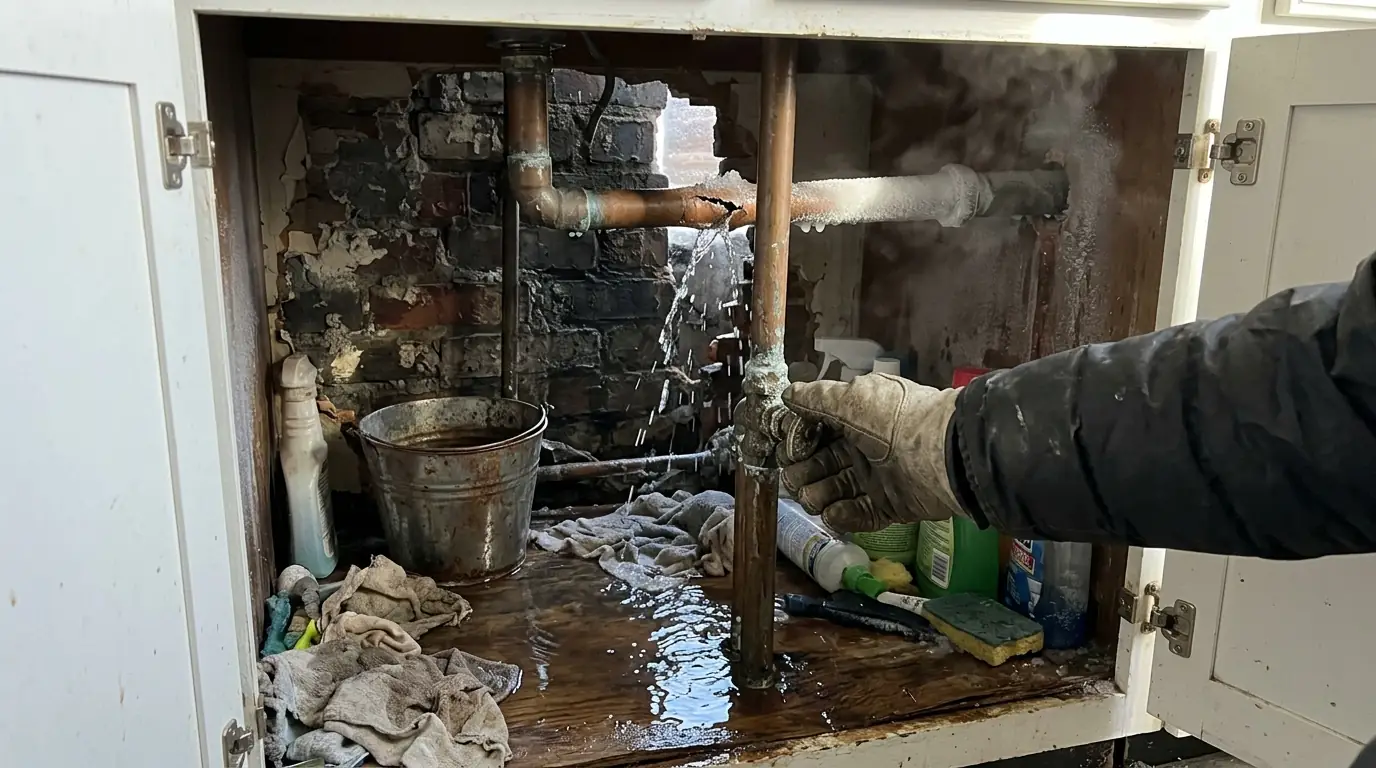
The short version
- Rear additions, sink cabinets on outside walls, crawl spaces and unheated porches freeze first.
- In most DC rowhouses the main shut-off is on the front basement wall where the line enters.
- Thaw slowly with gentle heat and an open faucet; never use a torch or open flame.
- After a burst, water hides in walls and ceilings, so it needs measured drying, not just mopping.
Why do pipes in older DC houses freeze when newer ones don't?
Most freezes in the District happen during short, sharp cold snaps, when a few nights drop well below 20 degrees and the wind pushes cold air into every gap. Older houses were not plumbed with that in mind. Supply lines were added or rerouted over the decades, often through the coldest wall or floor available, and many run through spaces that the heating system never reached.
Wind matters as much as temperature. A pipe in a well-insulated wall can sit through a cold night, while the same pipe next to a gap at the rim joist, where cold air blows straight across it, freezes in hours. That is why one house on a block bursts and the neighbors stay dry.
A frozen pipe often splits away from the ice itself. When water freezes, it expands and pushes on the trapped water between the ice and a closed faucet, and pressure in that stretch climbs until the weakest point gives. Many bursts are only found when the line thaws, often the next afternoon, when water suddenly runs through the crack.
Where do pipes usually freeze in rowhouses and older detached homes?
The same spots come up again and again in calls from rowhouse blocks and upper Northwest colonials alike.
- Rear additions and kitchen bump-outs: many rowhouses have a kitchen or bathroom in a back addition built over a shallow crawl space or a slab with little insulation, and those supply lines freeze first.
- Kitchen sinks on outside walls: the pipes sit inside a closed cabinet against a cold exterior wall, so warm room air never gets to them.
- Crawl spaces with open vents: cold air flows right across the supply lines, especially under additions and sunrooms.
- Unheated porches, mudrooms and vestibules: enclosed front porches on detached houses and the small vestibules at some rowhouse entrances often hide a line to a hose bib or a radiator.
- Exterior walls on the north and west sides, which get the least sun and the most winter wind.
- Hose bibs with the garden hose still attached, which traps water in the valve body.
- Radiators and hot-water heating loops in a closed-off or unused room, where the valve was shut and the room was allowed to go cold.
What can you do before a cold snap to keep pipes from freezing?
Most prevention costs little and takes an afternoon in the fall. The weeks before the first hard freeze are the time to do it, since crawl spaces and rim joists are much easier to work on before anything is frozen.
- Disconnect garden hoses and shut the inside valve for each outdoor faucet, then open the outside spigot to let it drain.
- Wrap exposed pipes in crawl spaces, basements and additions with foam pipe insulation, and seal drafts at the rim joist and around pipe penetrations.
- On the coldest nights, open the cabinet doors under sinks on outside walls so room air reaches the pipes.
- Let a faucet fed by a vulnerable line drip slightly, hot and cold, so water keeps moving and pressure has somewhere to go.
- Keep the thermostat at 55 degrees Fahrenheit or higher, day and night, including when you travel, and keep doors to rear additions open.
- Use heat cable only if it is rated for the purpose, follow the maker's instructions, and never wrap it over itself.
What should you do if a faucet slows to a trickle on a cold morning?
A faucet that barely runs, or a toilet that will not refill, usually means a frozen section somewhere on that line. Leave the faucet open. As the ice melts, moving water helps thaw the rest and relieves pressure.
Find the cold spot. It is usually where the line runs through the coldest part of the house: under the sink cabinet, behind the dishwasher, in the crawl space or along the wall of the addition. Warm it gently with a hair dryer, a heating pad or warm towels, working from the faucet back toward the cold section. A space heater can warm a room or cabinet if it is kept well away from anything that can burn.
Never use a torch, propane heater or any open flame on a pipe. That is how a frozen pipe turns into a house fire, especially near old wood framing, paper-faced insulation or a gas line. If you cannot find the frozen section, cannot reach it, or the pipe looks bulged or cracked, shut off the water to that line and call a plumber before thawing it further.
What do you do in the first minutes after a pipe bursts?
Shut off the water first. In most DC rowhouses the main shut-off sits on the front basement wall, where the service line comes in from the street, often near the meter. In detached homes it is usually on the basement wall closest to the street, and in a slab or crawl space house it may be near the water heater or in a utility closet. Find yours now, tag it and make sure it turns. Old gate valves sometimes seize, and the curb valve at the street is generally the utility's to operate.
Next, check for electrical risk. If water is near outlets, cords or the electrical panel, or the ceiling is sagging, stay out of that area. Turn off power at the breaker only if you can reach the panel while standing on a dry floor. Then open the lowest faucet in the house to drain what is left in the lines, and turn off the water heater if the tank may be empty.
Take photos and video of the burst, the water and the affected rooms before you move much. Move rugs, electronics and furniture out of the wet area, set wood furniture legs on foil or plastic, and poke a small hole in a bulging ceiling with a bucket under it only if you can do it from a safe spot. Our guide to documenting a water damage claim lists what to save, and burst pipe cleanup covers how we handle the extraction.
Why does drying after a burst take longer than mopping up?
Water from a burst supply line is clean at first, but it travels. In a rowhouse it runs down the inside of plaster walls, soaks floor framing and follows joists into the ceiling below. Mopping the floor removes what you can see while the water in the wall cavity stays put.
That is why drying starts with mapping. Our technicians use moisture meters and a thermal camera to trace where the water went, then set dehumidifiers and air movers and log readings every day until the materials match unaffected areas. Plaster, oak flooring and brick take longer than drywall, as our guide to typical drying timelines explains. In the colder months, dry winter air helps, but a closed basement still needs dehumidifiers. If a pipe has let go, call us, day or night, at (202) 989-3053 for water damage drying and cleanup.
Questions readers ask
Should I leave faucets dripping every winter night?
Not every night. A slow drip on lines that have frozen before, or that run through additions and outside walls, makes sense when temperatures drop well below freezing and wind is strong. On mild nights it only wastes water. A better long-term fix is insulating those lines and sealing the drafts around them so the drip is no longer needed.
How do I know if a pipe froze but did not burst?
Watch it as it thaws. Once water flows again, look and listen along the line for drips, hissing or wet spots on ceilings and walls. Check the water meter with every fixture off. If the dial or low-flow indicator still moves, there is a leak somewhere. Bulges and hairline cracks in copper or galvanized pipe also mean it needs repair.
Will a frozen radiator in an unused room damage the boiler?
It can cause problems for the whole system, so treat it seriously. A frozen hot-water radiator or loop can crack, and when it thaws it can leak heating water onto floors and ceilings. Turn the system off if you see leaking, keep the room heated, and have a heating technician check the radiator, valves and boiler before relying on it again.
Winifred Larkin, Knowledge Base Editor at JEC Restoration. She writes and updates these guides from the questions homeowners ask our crews on DC area jobs.
Services this guide connects to
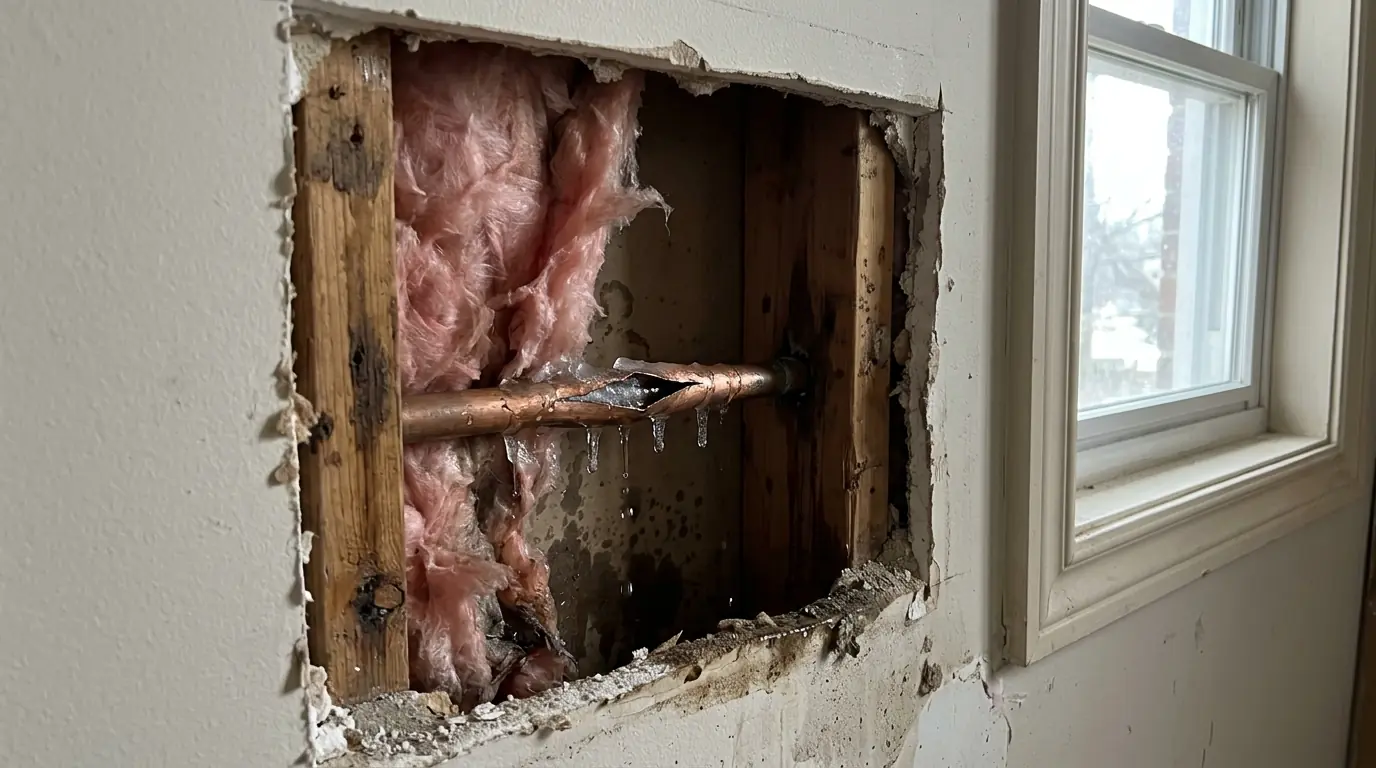
Burst Pipe Cleanup
Burst pipe cleanup deals with the water a split supply or heating line leaves inside walls, floors and ceilings: opening the wall at the break, extracting water, removing soaked insulation, and drying the cavities and the rooms below.
How we handle it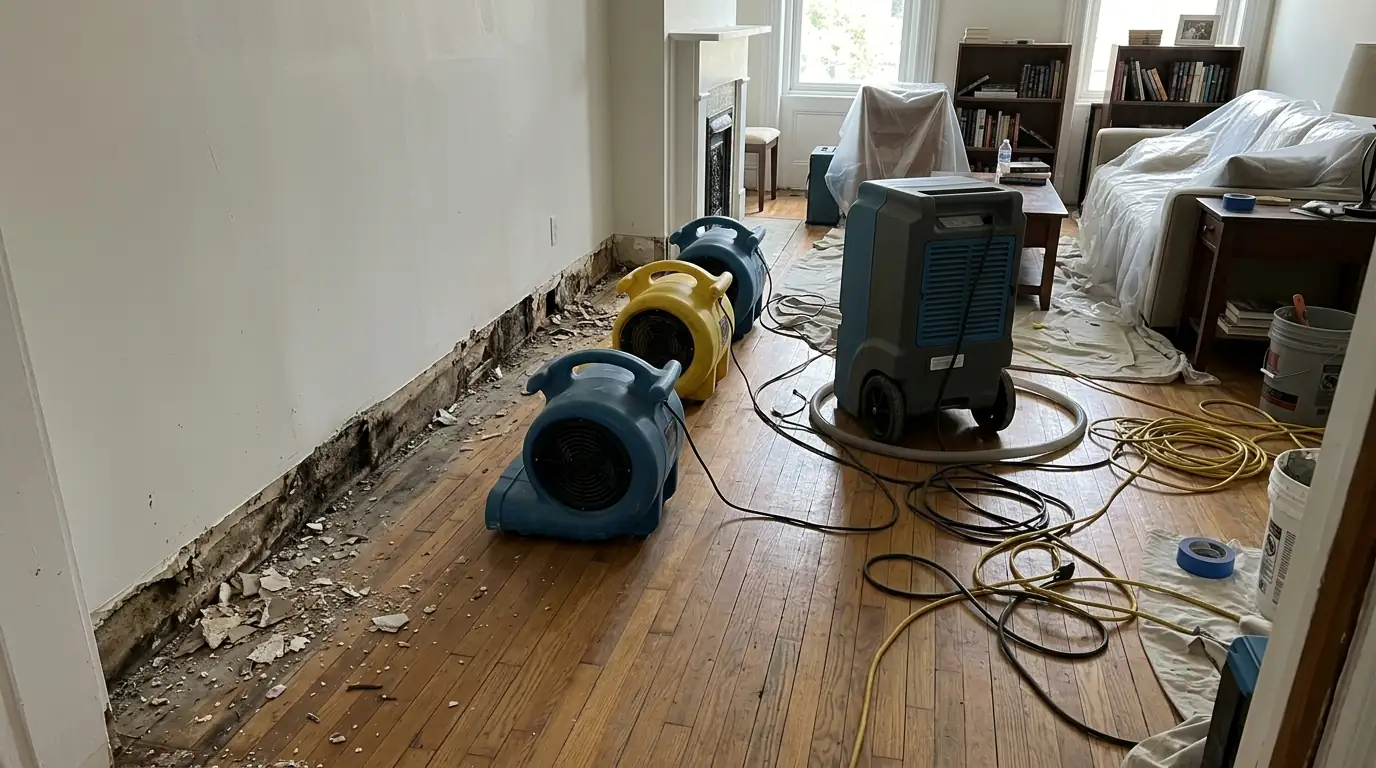
Water Damage Restoration
Water damage restoration is the full sequence after a leak or flood: stopping the source, extracting standing water, removing materials that cannot be saved, drying walls and floors with dehumidifiers and air movers, and logging moisture readings until they reach a dry standard.
How we handle it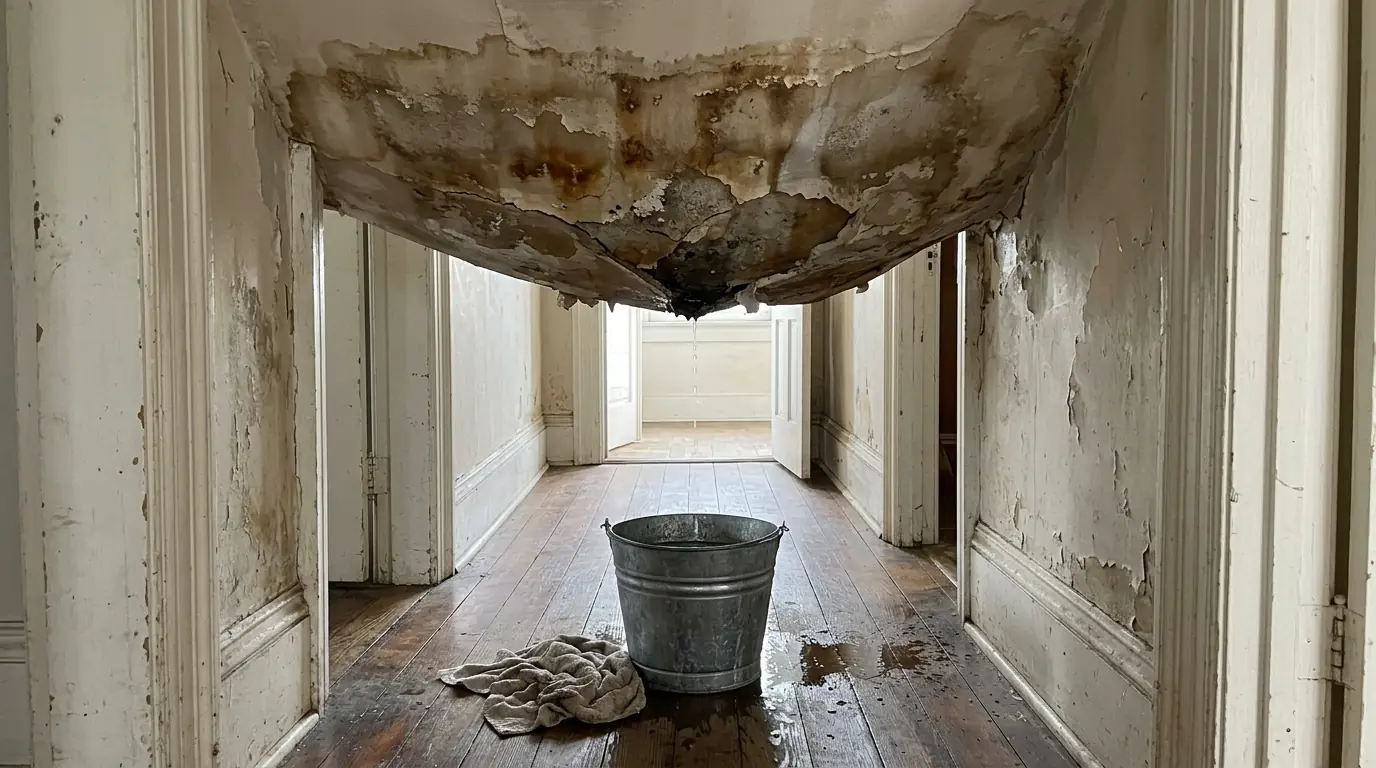
Ceiling Leak Damage
Ceiling leak damage work deals with water trapped above a ceiling from a roof, a bathroom, a radiator or an air conditioning line.
How we handle itNeed someone to look at it today?
Call (202) 989-3053. We answer 24/7 and can talk you through the next safe step on the phone.