Knowledge Base
Why smoke odor lingers after a kitchen fire
A pot of beans left on the burner can leave a smell that outlasts the fire by weeks. Here is why kitchen smoke odor is so stubborn, how to clean it in the right order, and when it takes more than a mop and a candle.
By Winifred Larkin, Knowledge Base EditorUpdated 6 min read
The short version
- Protein smoke from burned food leaves a nearly invisible, greasy film with a strong smell.
- Air fresheners mask odor for a while; removing the residue is what ends it.
- Forced-air systems spread odor, so change filters and clean ducts if the smell keeps returning.
- Clean top-down, then deodorize; ozone belongs only in unoccupied spaces.
Why can a small kitchen fire smell so much worse than it looks?
Most kitchen fires are not dramatic. A pan of chicken forgotten on the stove, rice boiled dry, a roast left too long. There may be no flames at all, just a scorched pot and a house full of smoke. When the windows are open and the smoke clears, people expect the smell to leave with it.
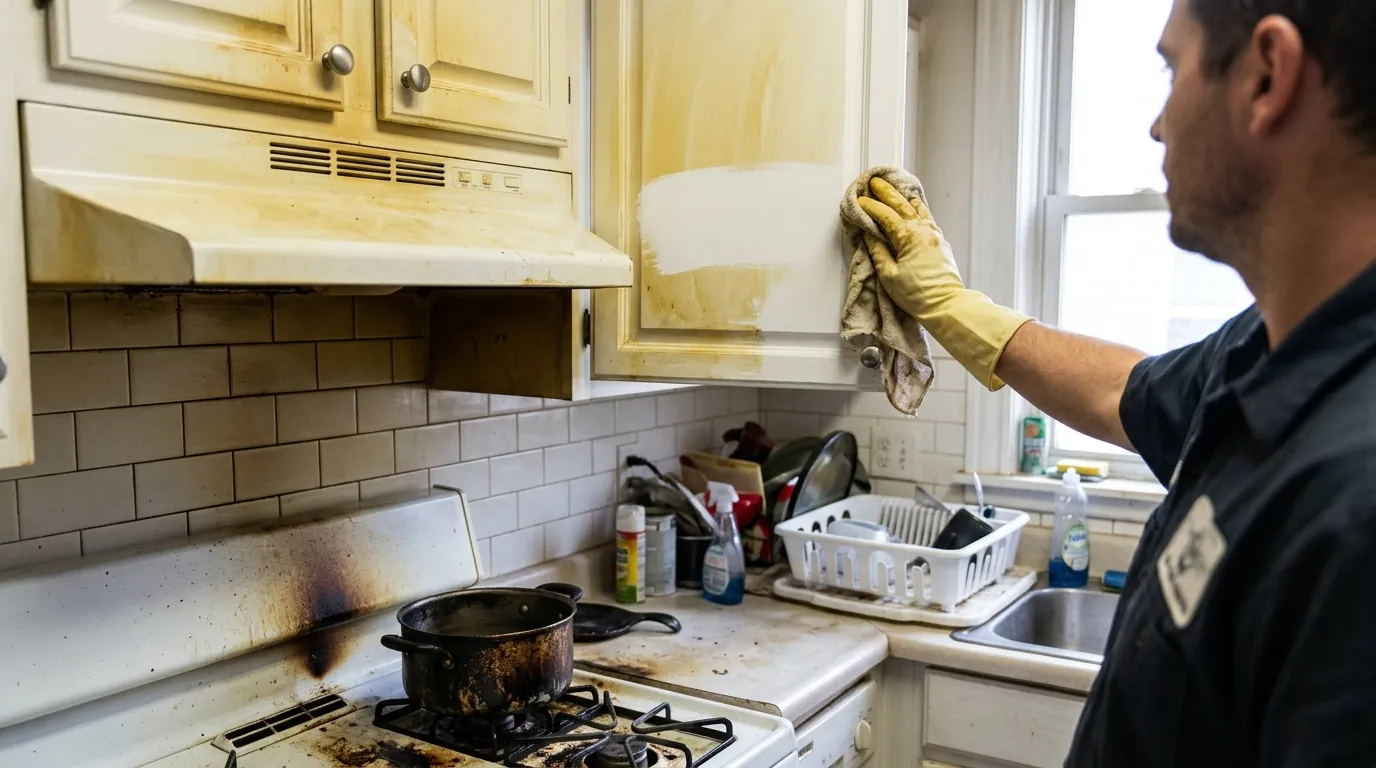
It rarely does. Burning food, especially meat, beans, eggs and other protein, produces what the restoration trade calls protein smoke. Unlike the black soot from a wood or plastic fire, protein smoke leaves a thin, greasy film that is pale yellow or nearly clear. You often cannot see it at all, yet you can smell it in every room the smoke reached.
The film sticks to painted walls and ceilings, cabinet faces, the insides of cabinets and drawers, light fixtures, window blinds, curtains and clothing in nearby closets. Because it bonds to surfaces rather than sitting on top as loose powder, a quick wipe with a dry cloth hardly touches it.
Why don't air fresheners or open windows get rid of it?
Air fresheners, plug-ins and scented candles add a stronger smell on top of the smoke. When they fade, the smoke smell is still there because its source, the film on surfaces, was never removed. Some people end up with a house that smells of smoke and vanilla.
Airing out helps with the smoke still hanging in the room, and it is worth doing right away. It does not reach the residue that has already settled. Smoke particles are small enough to drift into porous materials: flat paint, unfinished wood, drywall paper, upholstery, mattresses, carpet and the fibers of insulation.
Those materials hold odor and give it back slowly, a process often called off-gassing. Warm, humid days make it worse. That is why a kitchen that seemed fine in March can smell sharply of burned food during the first humid week of a DC summer, when warmer air pulls odor back out of walls and cabinets.
How does the heating and cooling system spread the smell?
If your home has forced-air heating or central air, the return vents pulled smoky air into the system while the fire was burning. The film coats the filter, the blower and the inside of the ductwork, and every time the system runs, it sends a little odor to rooms that never saw smoke.
Start by turning the system off if smoke is still in the air, and replace the filter once the air clears. If the smell keeps coming back from the vents after the house has been cleaned, the ducts, coil and blower may need cleaning as well. In rowhouses heated by radiators there are no ducts to carry odor, but smoke still travels up the stairwell and settles in bedrooms and closets on upper floors.
In condo buildings, smoke can also move through shared hallways, trash chutes and gaps around pipes into neighboring units. A small cooking fire in one apartment can leave a smell two floors up, which is worth telling building management about early.
What is the right order for cleaning smoke residue in a kitchen?
Order matters, because cleaning in the wrong sequence drips residue onto surfaces you already finished. Before you start, open windows, wear gloves and eye protection, and test every cleaner on a hidden spot first.
- Remove the source: the burned pot, food and anything that held the smoke, such as dish towels and paper goods.
- Throw out food that was open or in permeable packaging, plus anything in the room that looks or smells smoke-affected.
- Replace the furnace or air handler filter and the range hood filter, or clean metal mesh hood filters in hot, soapy water.
- Clean from the top down: ceiling, then walls, then cabinet faces and the insides of cabinets and drawers, then counters and appliances, then floors.
- Use a degreasing cleaner or a mild solution of warm water and dish soap for protein residue, wiping with a clean cloth and rinsing often.
- Launder curtains, cushion covers, rugs and clothing that smell of smoke, and wash dishes and utensils stored in cabinets that held odor.
- Only after cleaning, seal stubborn painted surfaces with an odor-blocking primer before repainting.
When does smoke odor need professional deodorization?
Call for help when the smell survives a careful cleaning, when smoke reached several rooms or floors, when the HVAC system keeps reintroducing odor, or when the fire left real charring on cabinets, walls or the ceiling. Charred material has to be removed before deodorizing will last.
Professional work follows the same logic as homeowner cleaning, just with more tools. Our technicians clean surfaces with specialized degreasers and HEPA vacuums, remove items that cannot be saved, then deodorize what remains. Three methods are common:
- Thermal fogging: a heated deodorant forms very fine particles that drift into the same cracks and porous materials the smoke reached. The space is vacated during fogging and aired out afterward.
- Hydroxyl generators: these machines produce hydroxyl radicals that break down odor molecules gradually, and they can run while people and pets are home.
- Ozone: very effective on stubborn odor, but ozone is a lung irritant, so it is used only in unoccupied spaces, with people, pets and plants out, and the area is aired out before anyone returns.
What should you keep from the day of the fire?
Before cleaning, photograph each affected room, including the inside of cabinets and closets, and keep receipts for any cleaning supplies, replacement filters or hotel nights. If you plan to file a claim, check your policy and call your insurer before throwing out damaged items, since the adjuster may want to see them. Our guide to documenting a home damage claim covers the same habits for smoke losses.
If the smell lingers after you have cleaned, we can help with kitchen fire cleanup, room-by-room smoke cleaning and odor treatment across Washington, DC and nearby suburbs. Call (202) 989-3053, day or night.
Questions readers ask
Will repainting the kitchen get rid of the smoke smell?
Not on its own. Paint over unclean walls traps the residue, and the smell often bleeds through within weeks, especially in humid weather. Paint can also fail to bond to greasy film. Clean the walls and ceiling first, let them dry, then use an odor-blocking primer on areas that still smell before the finish coat. This order makes repainting work.
Is it safe to use dishes and pans that were in the kitchen during the fire?
Glass, ceramic and metal dishes and cookware can usually be washed in hot, soapy water or the dishwasher and used again. Plastic containers, wooden spoons and cutting boards absorb odor and are harder to clean fully. Throw out food that was open or in cardboard, paper or thin plastic packaging, plus anything that looks or smells affected by smoke.
How long does smoke odor take to go away after professional cleaning?
For a contained kitchen fire with no charring, cleaning and deodorizing usually take a few days, and most of the smell should be gone when the work ends. Larger smoke losses that reached several floors or the ductwork can take longer, especially if drywall, insulation or cabinets need replacing. A faint smell on a hot day can mean a spot was missed.
Winifred Larkin, Knowledge Base Editor at JEC Restoration. She writes and updates these guides from the questions homeowners ask our crews on DC area jobs.
Services this guide connects to
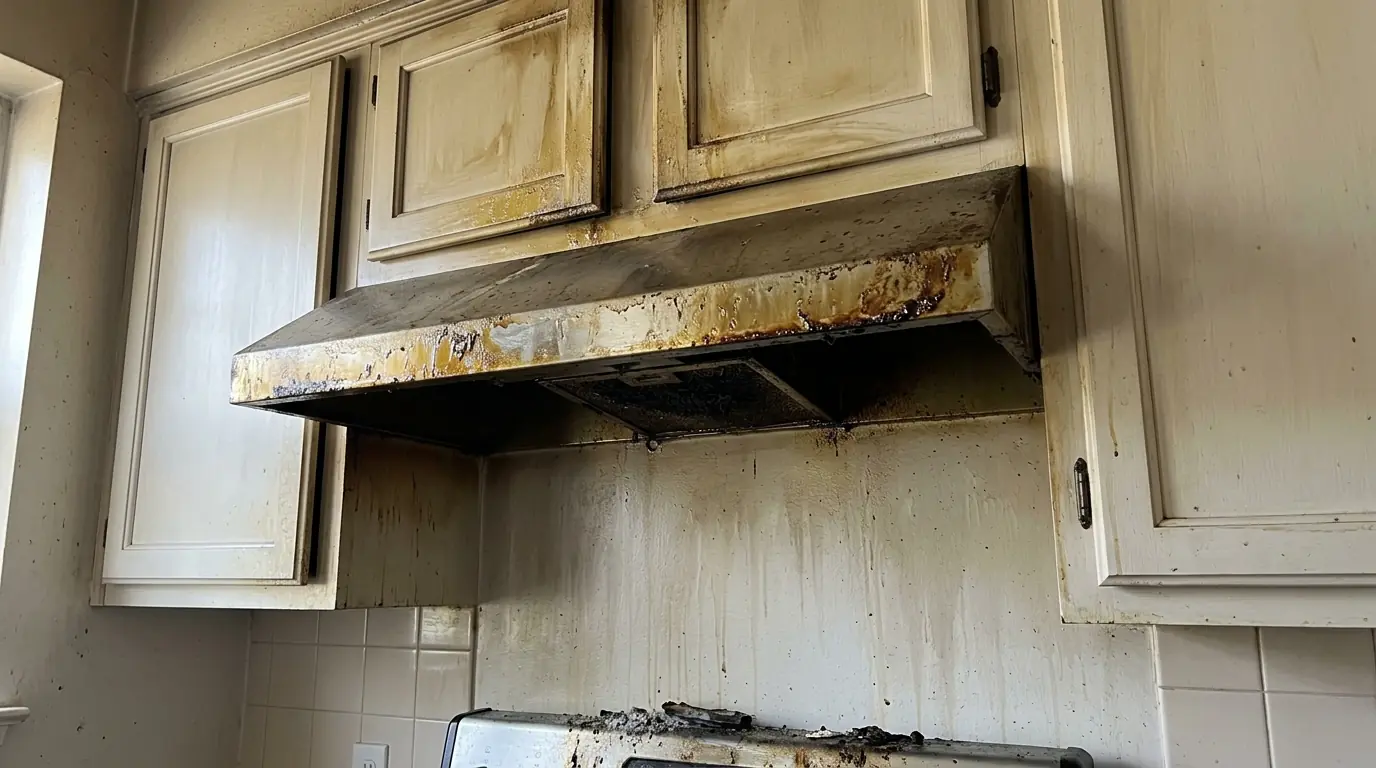
Kitchen Fire Cleanup
Kitchen fire cleanup removes the grease and protein residue a cooking fire leaves on cabinets, range hoods, walls, ceilings and appliances, then deals with the odor that settles into wood and paint.
How we handle it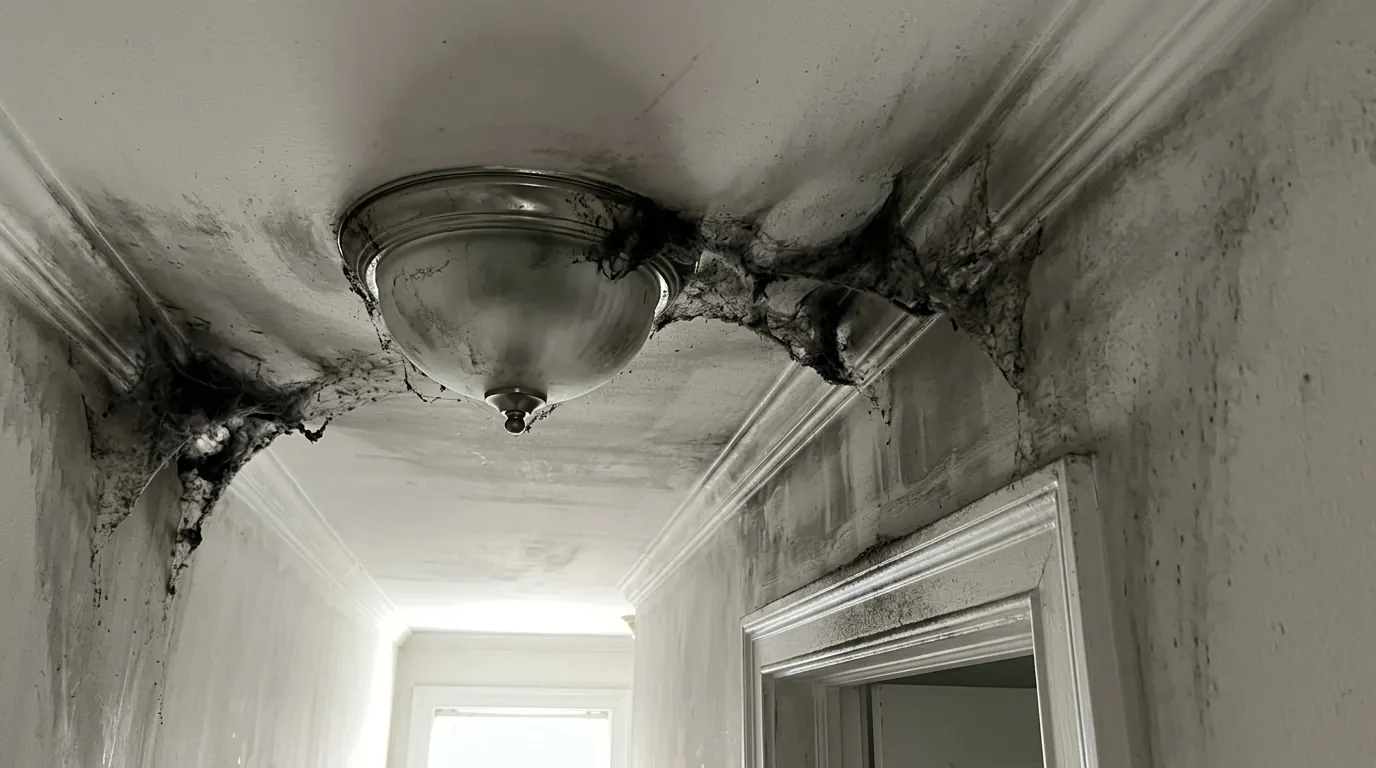
Smoke Damage Cleanup
Smoke damage cleanup removes the residue a fire leaves on walls, ceilings, ducts and belongings, then neutralizes the odor tied to it.
How we handle it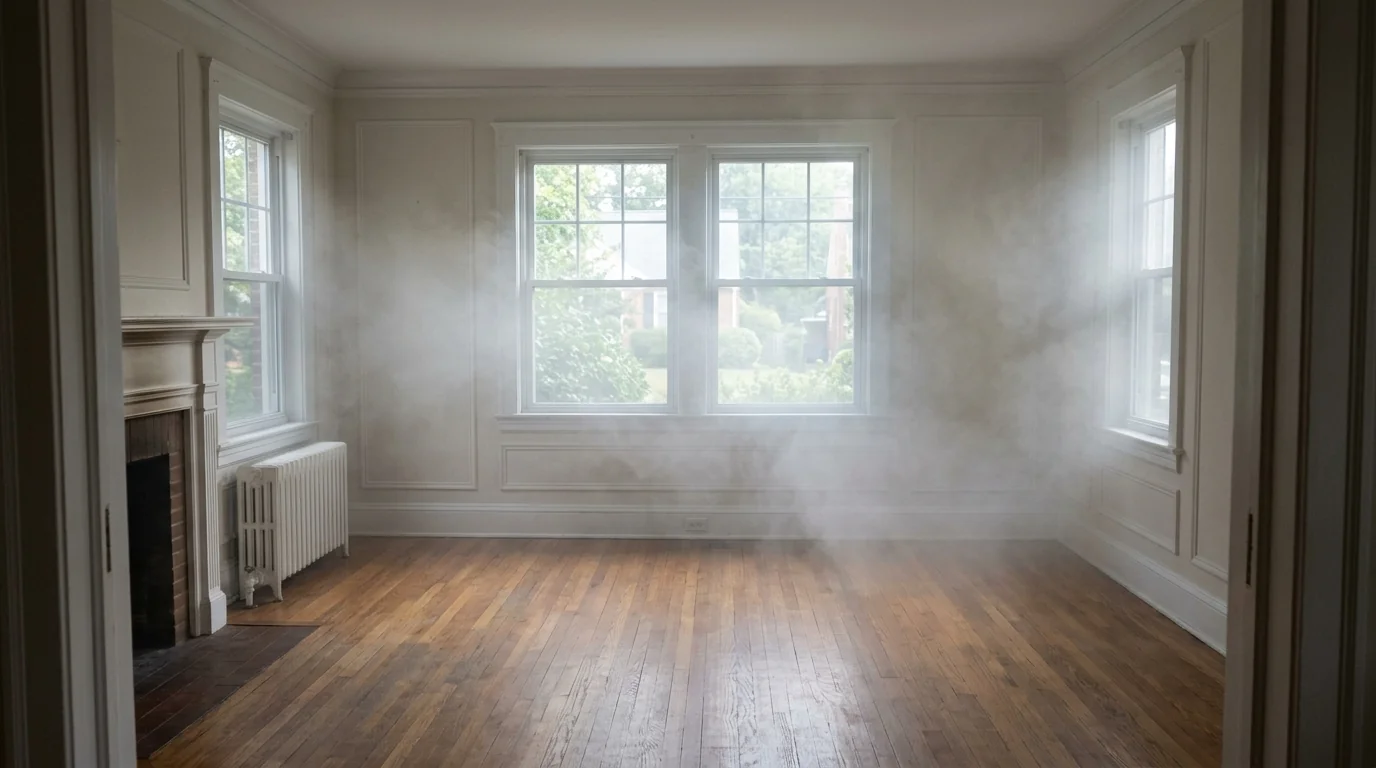
Odor Removal
Odor removal is the process of finding what's causing a persistent smell in a home, removing or cleaning that source, and then treating the remaining odor with methods like thermal fogging, hydroxyl generators or, in empty spaces, ozone.
How we handle itNeed someone to look at it today?
Call (202) 989-3053. We answer 24/7 and can talk you through the next safe step on the phone.