Knowledge Base
Can you stay in your home during mold remediation?
Most households stay put while a mold job runs. Whether yours should depends on where the work is, how big it is, what it does to your heating and cooling, and who lives in the house.
By Winifred Larkin, Knowledge Base EditorUpdated 6 min read
The short version
- Most households can stay when the work zone is sealed, under negative air and away from the kitchen, bedrooms and the only bathroom.
- Forced-air heating and cooling is often shut down if the equipment or ducts sit in the work zone; radiators usually stay on.
- Anyone with asthma, allergies or a weakened immune system should ask their doctor about staying elsewhere during removal.
- Containment stays sealed until the area passes its final check, even when it already looks clean.
What decides whether you can stay during the work?
No single rule covers every house. In many DC rowhouses, the layout works in your favor: the job is a basement mold cleanup, the family lives on the two floors above, and the basement door becomes the boundary. Crews come and go through the English basement entrance or the rear areaway door without crossing the main floor.
Small condos are harder. If the mold is behind the tub surround in the only bathroom, a few nights elsewhere often beat living around a sealed room. Belongings in the work area come out before containment goes up either way, and for a full basement, a contents pack-out keeps them clean and out of the path.
Before a job starts, our technicians walk through these questions with you:
- How big is the work area, and how many days will it stay sealed?
- Is the only bathroom, the kitchen or a bedroom inside the containment?
- Does the furnace or air handler sit in the work zone, or do its ducts run through it?
- Can the exhaust from the air machine go out a window or door you don't need?
- Does anyone in the home have asthma, allergies or a weakened immune system?
- Are there toddlers or pets who will be curious about plastic walls and cords?
How do containment and negative air keep the rest of the house livable?
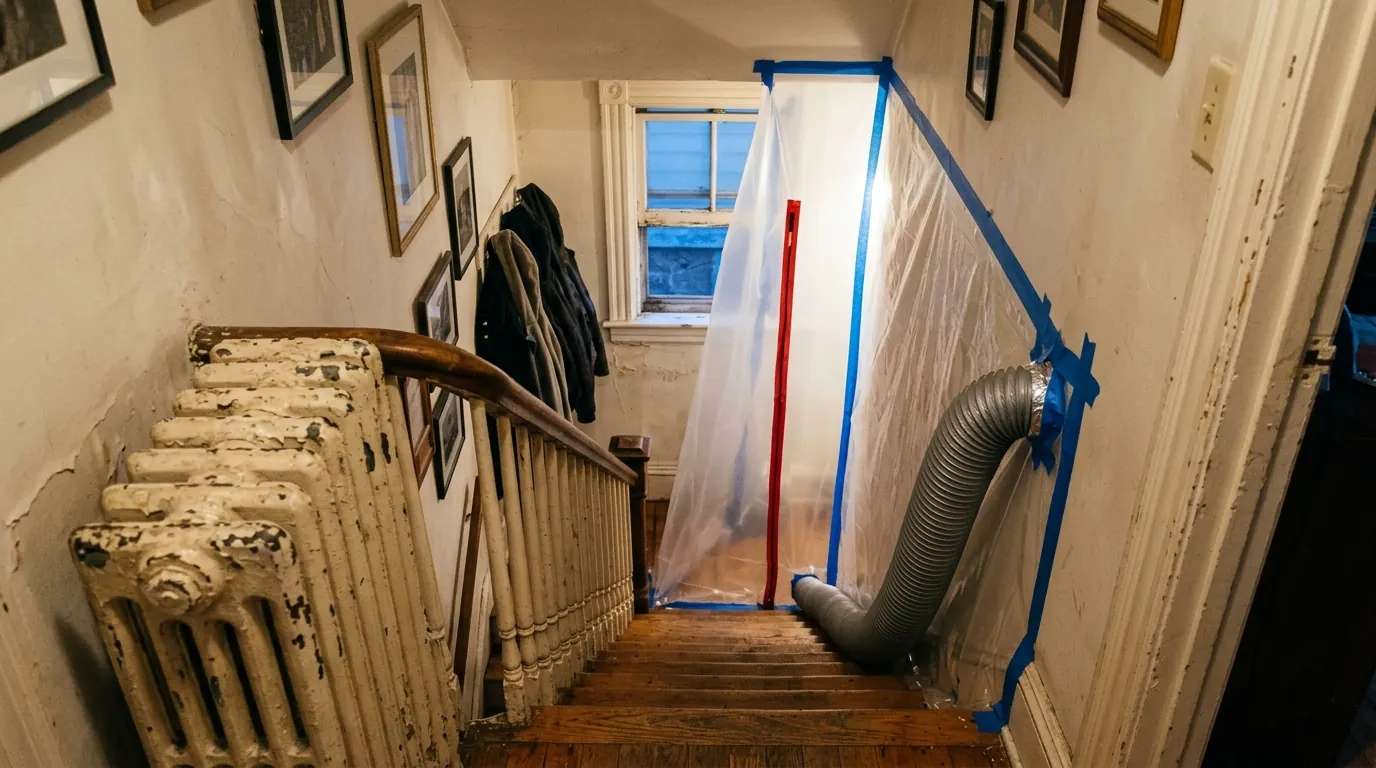
The work zone is closed off from the rest of the home with plastic sheeting and a zippered entry. A negative air machine pulls air out of that zone through a HEPA filter and sends it outdoors through a flexible duct. Because air is always being removed, the sealed area sits at slightly lower pressure than your living space, and any small gap draws house air in rather than letting dust out. On larger jobs, a gauge called a manometer confirms that pressure difference.
What you'll notice is a plastic wall across a doorway or the basement stairs, a duct running to a cracked window and a steady hum. A few house rules keep the system doing its job:
- Leave the zipper closed, even for a quick look; ask, and we'll show you progress photos.
- Don't move the exhaust duct or close the window it runs through.
- Keep pets away from the plastic, since cats in particular like to claw it.
- Don't switch the equipment off at night to cut the noise, because that drops the pressure difference.
Does the heating and air conditioning have to be shut down?
Often, at least in part. If the furnace or air handler sits inside the work zone, which is common in DC basements, or if its supply and return ducts pass through it, running the system could pull spores into the ductwork and blow them into every room. In those cases we shut it down and seal the registers in the work area for the length of the job.
Timing matters. A house without central air in a late-July heat wave is hard to live in, and a forced-air furnace in a sealed basement means no heat in January. Portable air conditioners or space heaters in occupied rooms can bridge a few days, and a planned job can sometimes wait for milder weather.
Older homes with radiators have an advantage here. Hot-water and steam radiators heat rooms without pushing air through ducts, so the heat can usually stay on. If the mold is inside the ductwork or on the cooling coil itself, that is a separate job, covered on our page about cleaning mold from ducts and air handlers.
What will the noise and equipment be like, day and night?
The negative air machine and any dehumidifiers run around the clock until the area passes its final check. Expect a steady sound about like a window air conditioner on high, coming from the basement or behind a closed door. Most people stop noticing it after a night or two.
Removal days are louder. Cutting drywall, pulling carpet and running HEPA vacuums happen during normal working hours, and those days stir up the most dust inside the enclosure. If you work from home, plan calls for the far end of the house. The equipment also draws real power, so we may ask you to keep a space heater or window unit off the same circuit.
Who should think about staying somewhere else?
Mold can trigger allergy and asthma symptoms in sensitive people, and removal is when the most material gets disturbed. Containment is designed to keep that dust inside the work zone, but some households choose extra distance anyway. If someone in your home has asthma, serious allergies, a lung condition or a weakened immune system, for example during cancer treatment or after a transplant, ask their doctor before the job starts whether they should stay elsewhere and for how long.
Children and pets raise practical concerns more than anything else. Toddlers are drawn to plastic walls, cords and humming machines, and dogs often bark at every visit. A common middle path is to stay away during removal days and come back once the enclosure is being cleaned and dried.
What does a typical schedule look like?
Every remediation job is sized after an assessment, but a single basement room with drywall removal often runs like this:
- Day one: belongings move out, containment and negative air go up, and registers in the zone are sealed.
- Days one and two: moldy drywall, insulation and carpet are cut out, bagged inside the enclosure and carried out sealed.
- Days two to four: framing is HEPA vacuumed, scrubbed and sanded where stained, while dehumidifiers bring the wood back to dry readings.
- Final day: a last HEPA vacuum and wipe-down, a visual check and, if you choose, clearance sampling.
- After clearance: the enclosure comes down, and new drywall, paint and flooring are scheduled.
Why does the plastic stay sealed until clearance?
By the last day the area looks clean, and the plastic is in the way. It still stays. Fine dust from removal settles on every surface inside the enclosure, including the sheeting, and the final HEPA vacuuming and wipe-down are what remove it. Taking containment down early lets that dust drift into the rest of the house.
Clearance confirms the work is done: no visible growth or debris, framing that matches dry reference readings and, when sampling is part of the plan, lab results comparing indoor air with an outdoor sample. If anything falls short, the area is cleaned again inside the same enclosure, which only works if it is still standing. If you're weighing whether to stay or go, call (202) 989-3053, and we can talk through your floor plan and household before anything is scheduled.
Questions readers ask
Can we keep using our only bathroom if the mold is in it?
Not while it is sealed for removal and drying. A bathroom job in a one-bath condo or rowhouse often runs two to four days, so most people stay with family or friends for that stretch, or schedule the work around a trip. Where there is a second toilet in the basement or a powder room, we lay out the containment so that one stays usable.
Where does the air from the negative air machine go, and can it reach my neighbor?
It passes through a HEPA filter, which by definition captures at least 99.97 percent of particles 0.3 microns across, then exits through a duct to the outdoors. On tight rowhouse blocks, we point the exhaust away from neighbors' windows, doors and air conditioner intakes, usually toward the rear yard or areaway. Filters are changed on a schedule and bagged with the debris.
Our bedroom is right above the basement containment. Is it okay to sleep there?
Usually, yes. The negative pressure inside the enclosure pulls air into the work zone, not up into the rooms above, and gaps around pipes and wiring in the work area's ceiling are sealed during setup. The bigger issue for most people is the steady hum at night. If anyone sleeping in that room has asthma or allergies, ask their doctor first.
Winifred Larkin, Knowledge Base Editor at JEC Restoration. She writes and updates these guides from the questions homeowners ask our crews on DC area jobs.
Services this guide connects to
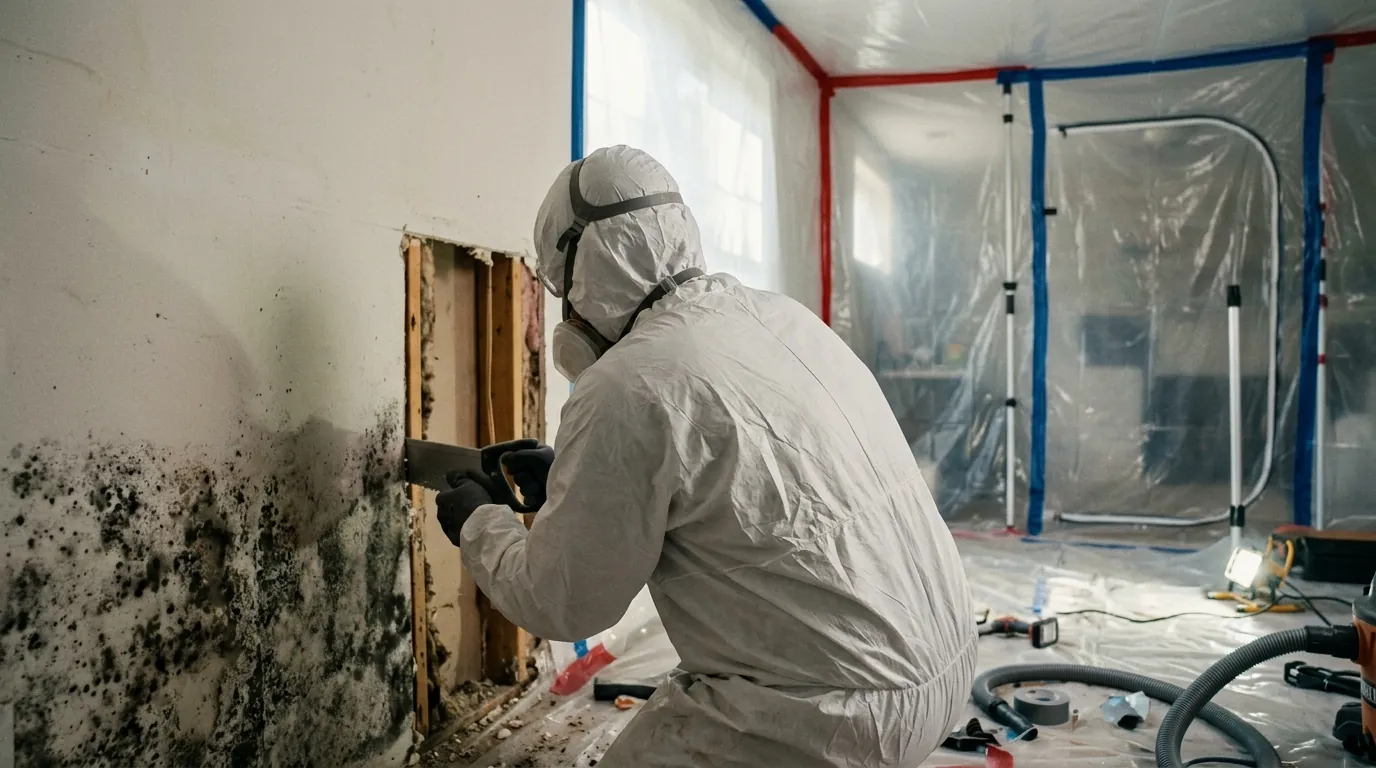
Mold Remediation
Mold remediation is the controlled removal of mold growth from a building.
How we handle it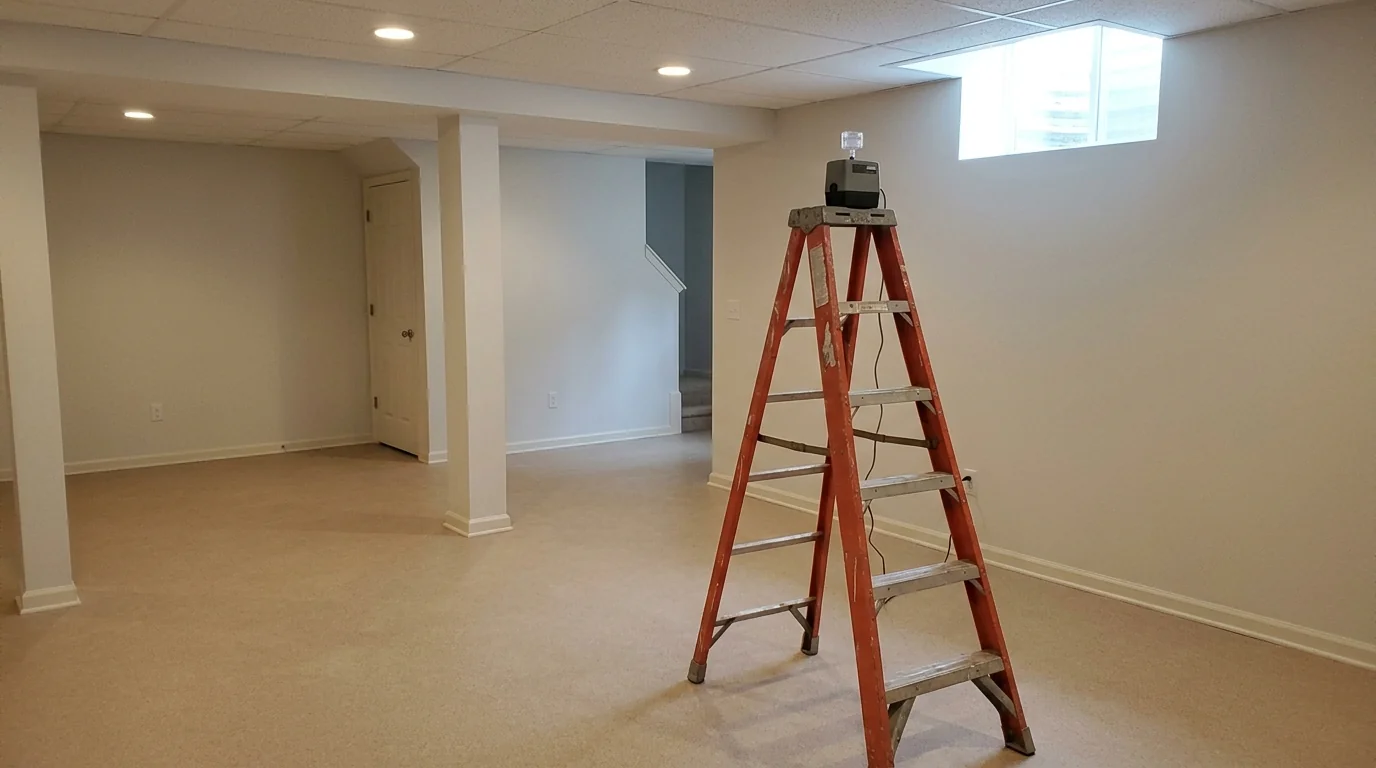
Mold Clearance Testing
Mold clearance testing, also called post-remediation verification, checks a work area after mold removal and before the walls are closed.
How we handle it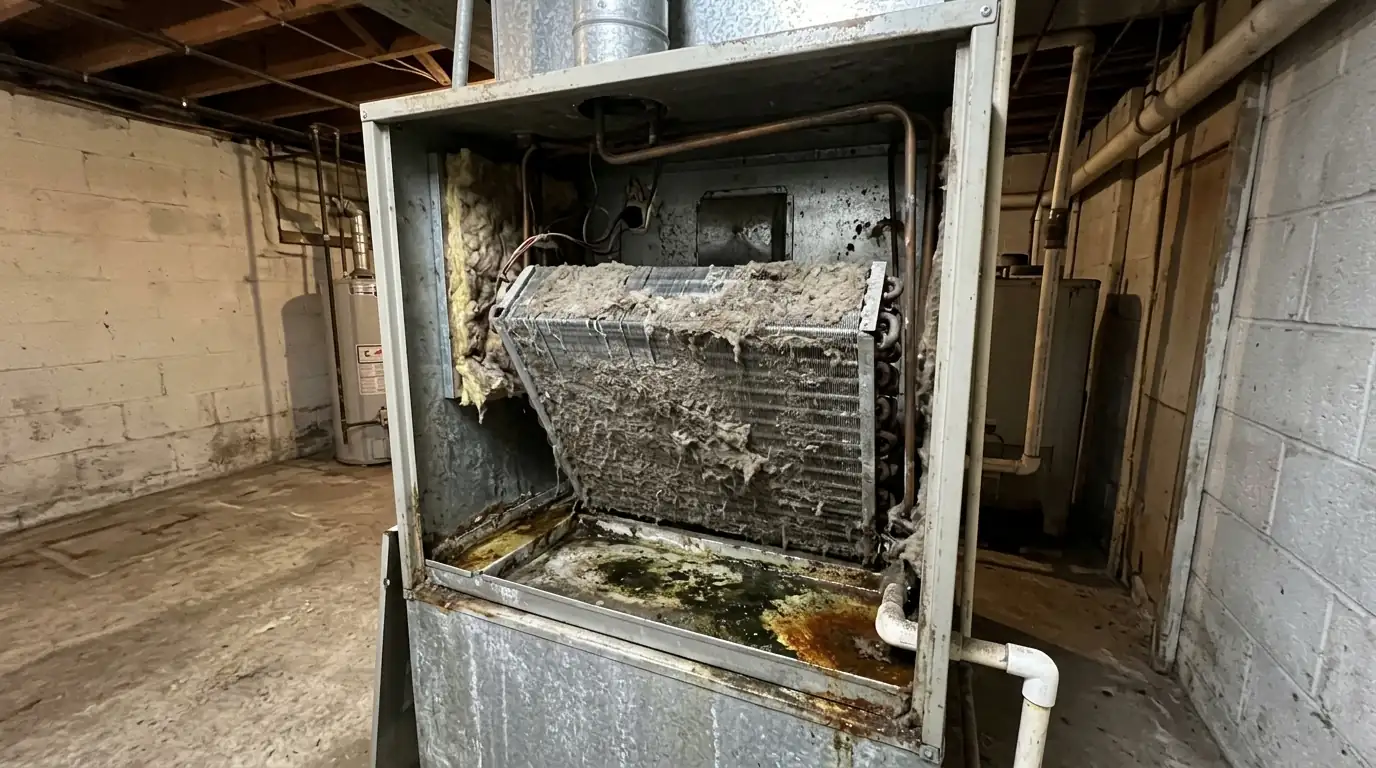
HVAC & Duct Mold Cleaning
HVAC and duct mold cleaning removes growth from the parts of a heating and cooling system that stay wet: the evaporator coil, drain pan, blower and the ducts closest to them.
How we handle itNeed someone to look at it today?
Call (202) 989-3053. We answer 24/7 and can talk you through the next safe step on the phone.